America vs Iran: The Conflict That Could Define 2026
Decades of hostility, nuclear brinkmanship, proxy wars, and crippling sanctions have brought the United States and Iran to what analysts are calling the most dangerous flashpoint since the 1979 Revolution. With diplomacy stalled and military assets repositioned, the world is watching the Persian Gulf — and holding its breath.
Rania KhalidMiddle East Bureau Chief · Frontline Intelligence Network
📅 5 MAR 2026⏱ 11 MIN READ📍 Beirut / WashingtonShareCopy LinkSave
🇺🇸UNITED STATES
VS
🇮🇷IRAN
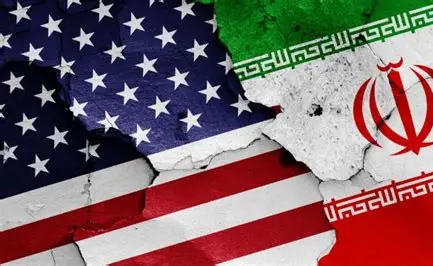
Graphic: US-Iran standoff in the Persian Gulf region — March 2026 | Frontline Graphics DeskSPECIAL REPORT
BEIRUT / WASHINGTON, March 5 — The Persian Gulf has seen no shortage of crises in its history. But what is unfolding in 2026 carries a weight that analysts, diplomats, and military planners describe in unusually stark terms: a confrontation between two powers with no diplomatic channel, no functional agreement, and an ever-shortening fuse — with the entire global energy market hanging in the balance.
The United States and Iran have been locked in open hostility for over four decades, since the Islamic Revolution of 1979 ended a relationship that once made Iran one of America’s closest regional allies. But the events of the past 18 months have compressed that long-simmering conflict into something more urgent, more volatile, and more difficult to walk back from than at any point since the hostage crisis.
84%Uranium enrichment level confirmed by IAEA — one step from weapons-grade
$1.9TGlobal economic impact projected if Strait of Hormuz is blocked
46Years of US-Iran hostility since the 1979 Islamic Revolution
The Nuclear Threshold: How Close Is Iran?
The central flashpoint in 2026 is Iran’s nuclear program — and specifically, how close Tehran is to possessing a functional nuclear weapon. The International Atomic Energy Agency’s most recent report, confirmed in February, found that Iran has enriched uranium to 84 percent purity — a level that has no civilian application and sits just one technical step below the 90 percent threshold considered weapons-grade.
Iran maintains, as it has for decades, that its nuclear program is entirely peaceful. Supreme Leader Khamenei has repeatedly issued religious edicts — fatwas — declaring nuclear weapons forbidden under Islamic law. But Western intelligence agencies and independent nuclear analysts increasingly view these assurances as diplomatic cover for a program that has structurally transformed into a near-nuclear capability.
Iran no longer needs to build a bomb to have a bomb’s worth of deterrence. The ambiguity itself is the weapon — and Washington has not yet figured out how to respond to that.— Dr. Leila Ahmadi, Strategic Studies Institute, London
The collapse of the 2015 Joint Comprehensive Plan of Action — the nuclear deal — following the US withdrawal in 2018 removed the last formal constraint on Iran’s enrichment activities. Subsequent negotiations have failed to produce a replacement framework. As of March 2026, there is no active diplomatic process, no monitoring mechanism beyond IAEA inspections Iran increasingly restricts, and no agreed definition of what would constitute a red line requiring military response.
Deep Dive: Iran’s Nuclear Timeline Explained
Our full explainer breaks down every key milestone in Iran’s nuclear program — from the Shah era to the JCPOA collapse and where things stand today. Essential reading for understanding the 2026 crisis.Read Full Analysis →
The Military Equation: Force Posture in the Gulf
While diplomats have been absent from the table, military planners on both sides have been extremely busy. The United States has repositioned a carrier strike group — led by the USS Gerald R. Ford — to the Persian Gulf in what Pentagon officials describe publicly as a “routine presence operation” but privately acknowledge as a deliberate signal of readiness.
Iran, for its part, has accelerated its own asymmetric preparations. The Islamic Revolutionary Guard Corps Navy has conducted three large-scale Persian Gulf exercises since October, testing swarm tactics with fast-attack boats — tactics specifically designed to neutralize the US Navy’s conventional advantages in confined waterways. Iran has also publicly demonstrated new anti-ship missile systems with ranges exceeding 700 kilometers.
PENTAGON DESK · WASHINGTON DC · 03 MAR 2026
“We are not seeking conflict. We are ensuring that Iran understands the cost of miscalculation. The assets in the region speak for themselves — we don’t need to say anything else.”
— Senior US Defense Official, speaking on condition of anonymity
The Strait of Hormuz Factor
Any serious analysis of a US-Iran military confrontation must begin and end with the Strait of Hormuz — the 33-kilometer-wide chokepoint through which approximately 20 percent of the world’s oil supply passes daily. Iran has threatened to close the strait in the event of military conflict on multiple occasions. Whether it could do so effectively is debated; that it could severely disrupt global energy markets even temporarily is not.
An Oxford Economics model commissioned by three Gulf sovereign wealth funds and seen by Frontline estimates a sustained disruption of Hormuz shipping would add $60–85 per barrel to global oil prices within 72 hours — triggering recession conditions in import-dependent economies from Japan to Germany within 90 days.
The Proxy War Dimension
The US-Iran conflict has never been purely bilateral. Iran’s strategic doctrine for decades has centered on maintaining a network of allied militias and proxy forces across the Middle East — Hezbollah in Lebanon, Hamas in Gaza, the Houthis in Yemen, and various Shia militias in Iraq and Syria. Together, these groups constitute what Iran calls the “Axis of Resistance.”
For the United States, these proxies represent both a standing threat to American forces and allies across the region, and a tool Iran uses to engage in conflict while maintaining deniability. The calculation has grown more complex as some of these groups have developed significant autonomous capabilities — the Houthis demonstrated this in 2024 with sustained drone and missile attacks on Red Sea shipping that drew global attention.
Full Coverage: Iran’s Proxy Network — Who They Are & What They Control
Our comprehensive map and guide to the Axis of Resistance — Hezbollah, the Houthis, Iraqi militias, and more — with updated territorial assessments and military capabilities for 2026.Explore the Proxy Network →
Historical Roots: How We Got Here
Key Moments in the US–Iran Conflict
1953
CIA-Backed Coup (Operation Ajax)
The US and UK orchestrate the overthrow of democratically elected PM Mossadegh, restoring the Shah — a foundational grievance in Iranian political memory.
1979
Islamic Revolution & Hostage Crisis
The Shah is deposed. Iranian students seize the US Embassy, holding 52 Americans hostage for 444 days. Diplomatic relations severed — never formally restored.
2002
“Axis of Evil” & Nuclear Revelation
President Bush labels Iran part of the “Axis of Evil.” Iran’s secret nuclear program at Natanz is revealed, triggering the dispute that continues to the present day.
2015
JCPOA Nuclear Deal Signed
After marathon negotiations, Iran agrees to limit enrichment in exchange for sanctions relief. Widely seen as the best chance for a managed relationship — short-lived.
2018
US Withdraws from JCPOA
President Trump pulls the US out of the nuclear deal, reimposing sweeping sanctions. Iran begins systematically exceeding enrichment limits.
2020
Assassination of Qasem Soleimani
US drone strike kills IRGC Quds Force commander Soleimani in Baghdad. Iran retaliates with ballistic missile strikes on US bases in Iraq. The world braces for war — it does not come.
2026
Nuclear Threshold Approached
Iran reaches 84% enrichment. No deal in sight. US carrier group repositioned. Analysts warn of the narrowest window for peaceful resolution in decades.
Sanctions: The Invisible War
Alongside the military posturing runs a parallel conflict that receives less dramatic coverage but has arguably done more damage to Iran than any military strike: economic warfare through sanctions. The United States maintains what are among the most comprehensive unilateral sanctions regimes ever constructed — targeting Iran’s oil exports, banking system, shipping industry, and access to the SWIFT international payments network.
The impact on ordinary Iranians has been severe. Inflation has exceeded 40 percent annually for several consecutive years. The Iranian rial has lost over 90 percent of its value against the dollar since 2018. Access to imported medicines and medical equipment has been periodically disrupted. And yet — as sanctions advocates have always struggled to explain — the Iranian government remains in power, its nuclear program has accelerated, and its regional influence has, by most measures, grown.
Sanctions are the new siege weapon — they breach the same walls, just slower. But history suggests the population suffers long before the government yields. Iran is testing that thesis to its limits.— Dr. Sina Ahmadi, Conflict Economics Research Group, Zurich
Can War Be Avoided?
The honest answer from analysts across the ideological spectrum is: yes, but the conditions for avoiding it are becoming harder to sustain. Both sides have domestic political incentives to appear resolute — Iran’s hardline establishment has built its legitimacy on resistance to American pressure; no US administration can afford to be seen as capitulating to a government it has labeled a state sponsor of terrorism.
What remains, then, are three scenarios: a negotiated return to some form of managed restraint (considered unlikely but not impossible by a minority of analysts); a continuation of the current gray-zone conflict — sanctions, proxies, cyber operations, and occasional strikes — that prevents outright war while allowing both sides to claim they are winning; or a miscalculation, an incident, a moment of poor judgment in the Persian Gulf or on the Lebanese border that spirals beyond anyone’s control.
History’s judgment on which of those three scenarios plays out will depend, as it so often does, on decisions made in the next few weeks — by people under enormous pressure, with imperfect information, and no guarantee that their opposite number is reading the same signals.
More on This Story at Our Website
Follow our complete America–Iran coverage — including live updates, expert analysis, interactive maps, and exclusive field reports from our correspondents across the Middle East.Visit Our Website for Full Coverage →
Rania Khalid is Frontline’s Middle East Bureau Chief, based between Beirut and Washington. She has covered US-Iran relations for 12 years, reporting from Tehran, Baghdad, Riyadh, and multiple UN negotiations. This article draws on interviews with current and former officials from the US State Department, European diplomatic missions, and Iranian opposition figures. Some sources requested anonymity due to the sensitivity of ongoing negotiations.
RK
Rania Khalid
Middle East Bureau Chief · Frontline Intelligence Network
Rania Khalid has covered US-Iran relations and Middle East geopolitics for 12 years, reporting from Tehran, Baghdad, Riyadh, Beirut, and multiple rounds of UN nuclear negotiations in Vienna. She holds a graduate degree in International Security from Sciences Po Paris and has been cited in briefings to the European Parliament and the UK House of Commons Foreign Affairs Committee.
More Special Reports
◆ War & Conflict
The New Drone War: Autonomous Weapons Rewrite Battle Strategy
MARCUS REYES · 5 MAR 2026 · 8 MIN
◆ Geopolitics
Sanctions Spiral: How Economic Warfare Is Reshaping Global Alliances
ELENA VASQUEZ · 4 MAR 2026 · 6 MIN
◆ Arms & Defense
Hypersonic Missiles Change the Nuclear Risk Calculus for NATO
JAMES OKAFOR · 3 MAR 2026 · 7 MIN