Have you ever noticed that your fingernails seem to need trimming far more often than your toenails? Or that the nails on your dominant hand grow just a little faster than the rest? It’s one of those everyday observations we rarely stop to question — but the answer is surprisingly fascinating.
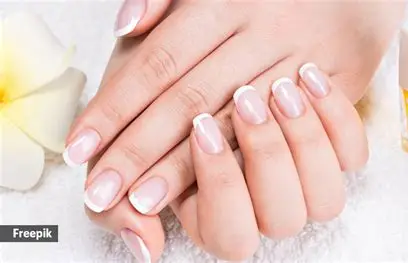
Nails may look simple, but there’s a lot happening beneath the surface. From their structure and function to the science behind their growth, your nails quietly reveal how your body works. Let’s break it down in a way that actually makes sense.
What Are Nails Made Of?
Nails are hard, protective coverings found at the tips of our fingers and toes. They are made primarily of keratin, the same strong protein found in hair and the outer layer of skin.
According to dermatologists, nails are formed from tightly packed dead cells. While that might sound uninteresting, it’s actually what gives nails their strength and durability. These dead cells form the nail plate, the visible part of the nail that we trim, paint, and sometimes bite (even though we shouldn’t).
Despite being made of dead cells, nails are very much connected to living tissue — which is where their growth story begins.
Are Nails Really Lifeless?
Not entirely.
While the nail plate itself is made of dead cells, nail growth comes from a living area under the skin called the nail matrix. The matrix is located at the base of the nail, just behind the cuticle.
Here’s how it works:
- The nail matrix produces new cells.
- These new cells push older cells forward.
- As they move outward, the cells harden and compact.
- This process creates the visible nail that continues to grow over time.
So while the part you see is “dead,” the engine behind nail growth is very much alive and active.
What Is the Function of Nails?
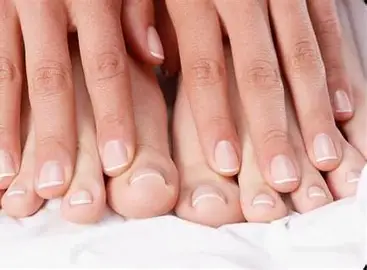
Nails do more than just look good with a fresh coat of polish. They play several important roles in daily life:
- Protection
Nails shield the sensitive tips of your fingers and toes from injury and pressure. - Better Grip and Control
Nails provide support to the fingertips, helping you grasp small objects, type on a keyboard, or pick up a coin. - Enhanced Sense of Touch
Nails increase fingertip sensitivity by providing resistance, allowing nerves to better detect pressure and texture. - Everyday Tools
From scratching an itch to opening a sticker or separating pages, nails often act as built-in tools. - Self-Expression
Nail art, grooming, and styling have also become a form of personal expression and confidence for many people.
Why Do Fingernails Grow Faster Than Toenails?
This is where things get interesting.
On average:
- Fingernails grow about 3 mm per month
- Toenails grow about 1.5–1.6 mm per month
That means fingernails grow almost twice as fast as toenails.
So why the difference?
1. Better Blood Circulation
Hands generally have better blood flow than feet. Increased blood circulation means more oxygen and nutrients reach the nail matrix, speeding up nail growth.
2. Frequent Use and Movement
We constantly use our hands — typing, writing, cooking, lifting, and gesturing. This frequent movement stimulates blood flow, which can boost nail growth.
3. Micro-Trauma Triggers Growth
Fingernails are exposed to minor trauma throughout the day — tapping, gripping, even occasional nail biting. Studies suggest that mild, repeated trauma can increase blood supply to the nail area, encouraging faster growth.
4. Evolutionary Reasons
From an evolutionary perspective, hands play a more active role in survival and daily function than feet. Faster nail growth may have developed as a response to higher usage and wear.
Why Do Nails on the Dominant Hand Grow Faster?
If you’re right-handed, your right-hand nails often grow faster. If you’re left-handed, it’s usually the opposite.
The reason is simple: more use equals more stimulation.
Your dominant hand:
- Experiences more movement
- Faces more friction and pressure
- Receives increased blood circulation
All of this sends signals to the nail matrix to produce cells more rapidly, resulting in faster growth.
Why Is Nail Care Important?
Healthy nails are more than just cosmetic. Poor nail care can lead to infections and long-term damage.
Neglected nails may develop:
- Paronychia (infection around the nail)
- Onycholysis (nail separation)
- Nail dystrophy (abnormal growth or shape)
- Fungal or bacterial infections
- Painful abscesses
Since nails grow slowly, especially toenails, damage can take months to heal.
Simple Ways to Take Care of Your Nails
Good nail care doesn’t require expensive products — just consistency.
Here are some easy, dermatologist-approved tips:
- Keep Nails Clean
Wash hands and feet regularly using mild soap and water. - Trim Regularly
Cut nails straight across and smooth edges with a file to prevent breakage. - Don’t Bite or Pick
Nail biting and cuticle picking increase the risk of infection and damage the nail matrix. - Moisturise Often
Use hand cream or cuticle oil to prevent dryness and cracking. - Wear Gloves for Chores
Protect nails from harsh chemicals and excessive moisture while cleaning. - Don’t Use Nails as Tools
Avoid opening cans, scraping surfaces, or peeling objects with your nails. - Choose Nail Salons Carefully
Make sure tools are sterilised and hygiene standards are followed.
What Your Nails Say About Your Health
Changes in nail colour, texture, or growth speed can sometimes signal underlying health issues such as nutritional deficiencies, infections, or circulation problems. Paying attention to your nails can offer early clues about your overall well-being.
Final Thoughts
Nails may seem like a small detail, but they reflect the complex coordination of blood flow, cell growth, and daily activity inside your body. The reason your fingernails — especially on your dominant hand — grow faster than your toenails comes down to circulation, movement, and biology working together.
For more information, please visit : https://krsyara.com/